Gardening for the Differently Abled
(And all of us who are Simply Getting Less Young)
Q. Julianne in Glenside, PA (home of the fabulous Keswick Theatre, where back in the day, I saw Dave Mason and Steven Stills, among many others who appeared at the historic 1300 seat venue.) writes: “I’d love to hear your tips, tricks, and advice for people who love to garden but have to contend with physical disabilities or limitations. I’ve had a lot of health problems this year, including a broken foot, and I’m not fully back up to speed in the garden. But gardening is SO important to my mental health. I’m sure there are people of all ages with a variety of physical issues that would love to hear how to garden in the body they have right now.”
A. This topic is so important that I created an entire talk on it for some of my personal appearances; advised the creators of a planned community garden on how to make sure the result would be ADA (Americans with Disabilities Act) compliant; and designed a small-scale working garden for a facility whose residents had physical limitations.
Bullet point time:
A. This topic is so important that I created an entire talk on it for some of my personal appearances; advised the creators of a planned community garden on how to make sure the result would be ADA (Americans with Disabilities Act) compliant; and designed a small-scale working garden for a facility whose residents had physical limitations.
Bullet point time:
- Wide lanes. The walking paths in my garden, installed when I was in my thirties, are much too small to accommodate a wheelchair or a walker. (They can barely accommodate me!) Luckily, half of the (original) beds were framed with local fieldstone, and ‘we’ (my helper and I) are slowly repositioning the stones inward to make wider lanes.
- Balance. I do NOT want to fall on uneven ground (heck, I don’t want to fall period!), so with the aid of my ninja helper Sean, we are leveling out the uneven areas. (OK; Sean does the work; I stand there and say, “you missed a spot”.)
- Garden Grab bars. Hammer pipes into select areas of the garden in case you start feeling unsteady. If you have (or can create) a vertical garden up against a sturdy wall, consider installing real bathroom-style grab bars to help you get down a little lower and get back up without calling for help. (Yes; the voice of experience here…)
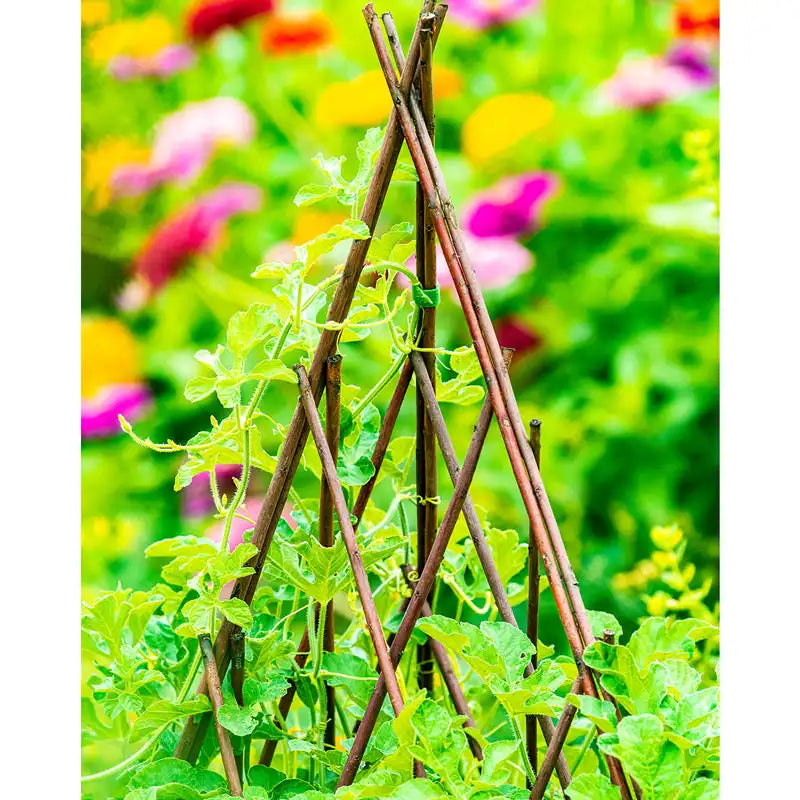
- Grow up. Install tall growing perennials where the flowers will be up where you want them. Trellis anything you can, like pole beans, indeterminate tomatoes and cucumbers, for easy picking and no bending.
- Critical: If you find yourself beginning to bend, stop immediately and rethink the chore. Place a “DO NOT BEND! “sign in the garden.
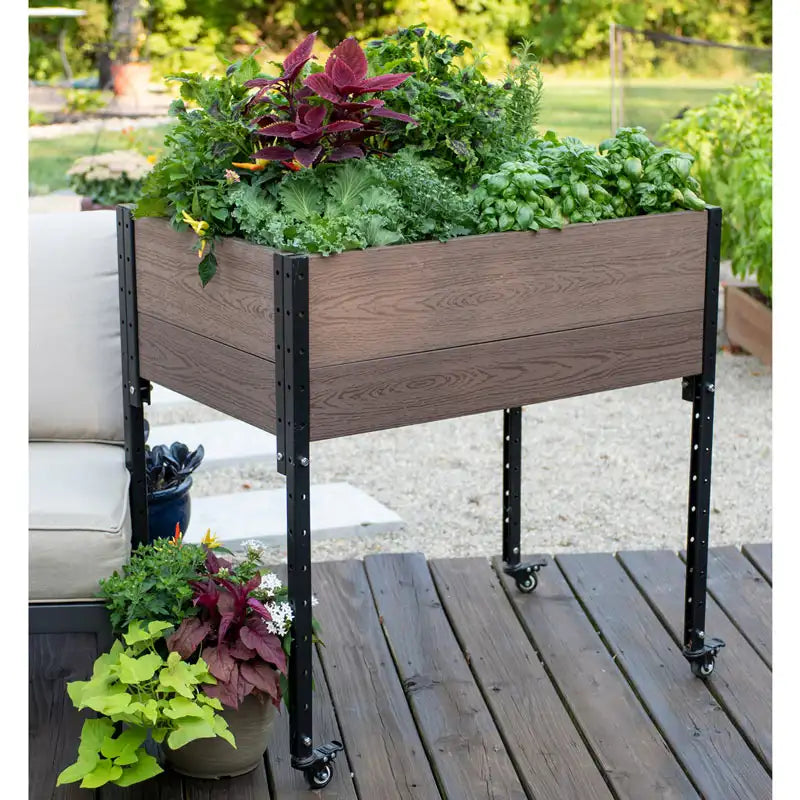
- Tabletop gardening. Do you have a nice flat patio or other outdoor space with full sun? Get some of them big white folding tables, or even better, pic-a-nic tables, and arrange good sized rectangular planters around the edges. Make sure they can be easily assembled and installed on-site. (By someone who owes you a favor; or you can pay someone to do it. Hey! It’s the gig economy; take advantage of it!)
- Use the containers atop the tables to grow flowers, herbs, well-behaved pepper plants and determinate tomato varieties that specifically define themselves as ‘bush’ or ‘dwarf’. Improvements in breeding over the years have made it possible to grow full size tomatoes on plants that top out at two or three feet. Really! I have grown several ‘dwarf’ varieties, including my personal favorite, Tasmanian Chocolate. (Tastes like a tomato, not chocolate. A darn good tomato.)
- Don’t stoop to the level of weeds!
- There are several devices that do the job of dispatching unwanted plants while you remain standing, like The Water Powered Weeder (a long spike that you attach to your garden hose, shove into the soil, press the trigger and it floods the weed up and out of the soil).
- Or a propane-powered ‘flame weeder’. My preferred model was introduced by Bernzomatic decades ago. It’s a simple shepherd’s hook design. You attach a small (camp stove-sized) propane bottle on the short end, turn a dial to release the gas and click the automatic igniter that shoots an adjustable flame at the weeds you wish to kill by dehydration (or burn to a crisp; we won’t judge). There are many other styles out there; stick to the shepherd’s hook design.
- There are several devices that do the job of dispatching unwanted plants while you remain standing, like The Water Powered Weeder (a long spike that you attach to your garden hose, shove into the soil, press the trigger and it floods the weed up and out of the soil).
- Additional resources:
- One of the best sites I found online is produced by the Victoria State Government Department of Health in conjunction with the Horticultural Therapy Association of Victoria, Inc. (Yes, it’s from Australia, but every word is relevant to us in the US (and other countries.) They cover many great ideas I didn’t have room to mention here, and have an audio link for the vision impaired. We’ll post the link online with this question of the week:
https://www.betterhealth.vic.gov.au/health/healthyliving/gardening-people-with-disabilities
- One of the best sites I found online is produced by the Victoria State Government Department of Health in conjunction with the Horticultural Therapy Association of Victoria, Inc. (Yes, it’s from Australia, but every word is relevant to us in the US (and other countries.) They cover many great ideas I didn’t have room to mention here, and have an audio link for the vision impaired. We’ll post the link online with this question of the week:
- Money and labor; the elephants in the room. Any enterprise like this is going to require some amount of initial investment. If you can’t afford it, reach out to your city, state, municipality or horticultural school to see if they can subsidize some or all of the project.
- Labor: If you can’t afford to hire a part-time helper, contact your local Girl Scout, Boy Scout, or similar organization. Making a garden handicapped accessible would be a great Eagle Scout or Gold Star project. Help a kid get a major merit badge!
- And finally: some sources suggest stretching before you go outside to work. This is dangerously outdated advice. A multitude of studies have found that stretching cold muscles greatly increases the risk of injury. The best alternative is to warm up passively with a warm shower; and maybe take some Tylenol or an NSAID an hour in advance if that’s medically all right for you.