Companion planting for Cabbage Pests
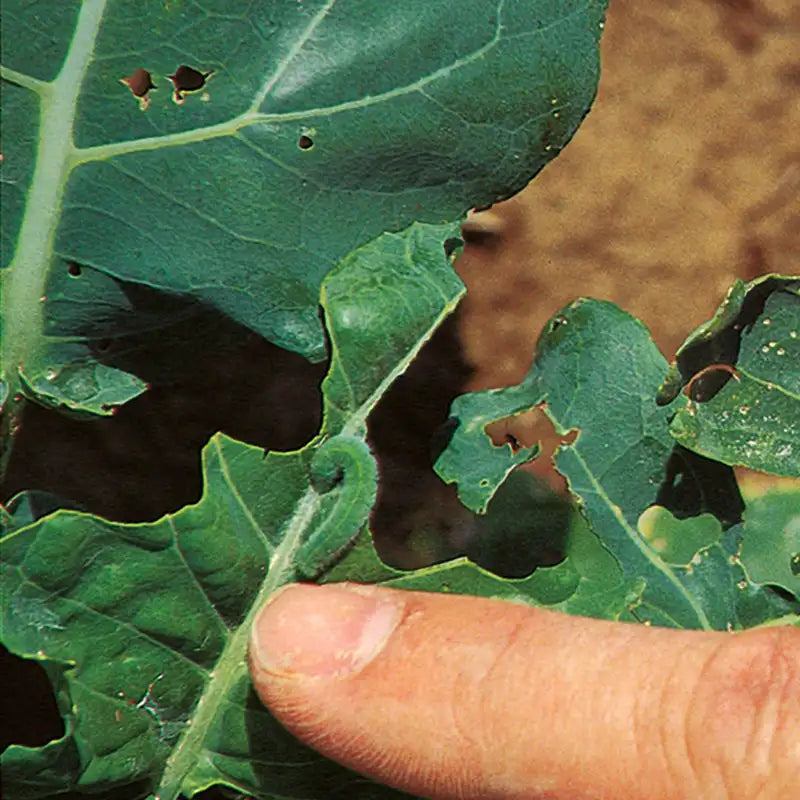

Q. Betsy ‘near Cincinnati’ writes: “I’ve read about companion planting to repel white cabbage moths in a couple of my gardening books. Is there an annual flower or herb I can plant that will repel the moth? I’m getting tired of checking each leaf of Kale for caterpillars before I make a salad!”
A. The basic answer is yes. The plants in question attract beneficial mini-wasps whose larvae parasitize many caterpillar pests. I will note here for waspaphobics that these creatures are so tiny it’s hard to see them, so they pose no stinging threat to you.
They are a popular mail-order bio-control (last time I checked, they’re shipped in the egg form, stuck to cards that you place near the plants most often attacked, which are typically members of the Brassica family, like cabbage, broccoli and Brussel sprouts; but sometimes they migrate to tomatoes, another plant their green caterpillar form nicely mimics the leaves of the plant.
The plants that attract the adult form of these wasps are many, and include yarrow (a good overall attractor of parasitic and predatory insects), dill, fennel, Queen Anne’s Lace (which is especially attractive to the family of mini-wasps you want to attract), sweet Alyssum, borage and cilantro/coriander. They provide pollen and nectar to the adults, the females of which then seek out a caterpillar and inject eggs into it.
Like the xenomorph creature that film goers know as ‘the Alien’, the larvae that emerge from those eggs consume their prey carefully from the inside, making their host last until the wasps are fully grown and can emerge with enough energy to fly back to their pollen and nectar plants to get a sugar rush and repeat the cycle.
So, the ‘companion plants’ in this scenario don’t have any kind of actual repellant activity (no plant does); they attract the wasps whose babies eat the caterpillars from the inside out.
I would be remiss if I did not also mention that many birds like to feed on big juicy caterpillars (the wasps may be tiny, but the caterpillars are not). Chickadees and nuthatch are the best predators, and their preferred habitat is around people’s homes, so the only thing you need to do is provide a fresh source of water.
You don’t want to feed them seed, which would fill them up. They’re very good at finding food in nature, especially in the form of garden pests. Ah, but clean water can be scarce in the summer, so the more birdbaths you put out, the more pest-eaters you will attract.
And don’t neglect chickens! They generally don’t bother fully grown plants (just tiny sprouts) and the protein from the caterpillars helps them produce more nutritious eggs! If you don’t want them pecking around (and fertilizing) your garden, hand pick the caterpillars off the plants and toss them in the coop. Yum!
Outside of Nature’s predators, your best weapon against destructive {quote} ‘worms’ is the old original form of Bt, a naturally occurring soil organism that you spray on the plants they’re damaging. As soon as a caterpillar starts munching on a sprayed leaf, their stomachs stop working and they soon die.
Bt is the first in a family of related strains that have been found to be specific against specific pests. It’s often called Dipel, as that was the trade name it was sold under for many years (and still is). It harms nothing else—a toad or a bird can eat a caterpillar that is dying from Bt and won’t be harmed. Bt (short for Bacillus thuringensis) ONLY affects caterpillars that eat the leaves of a sprayed plant. Period.
Bt does NOT harm bees, birds, toads (another great predator; place their water on the ground instead of up high), pets, butterflies, true worms or wombats! It ONLY affects caterpillars and the caterpillars have to eat the sprayed leaves of the plant for it to be effective. So don’t spray your parsley; it’s the host plant for the ‘worm’ that produces the beautiful Eastern Black Swallowtail butterfly.
Note: The outdated term ‘worm’ (a moniker that early farmers applied to pest caterpillars) is erroneous (it’s also wrong). True worms don’t harm plants, but farmers still use names like tomato hornworm, corn earworm, cabbage worm, etc.
And of course, don’t spray milkweed with Bt, lest you harm the caterpillar form of the monarch butterfly, which is probably why you planted the milkweed in the first place.
Oh—and the innocent-looking day-flying white “moth” (it’s not a moth) fluttering around your cabbage has a weird taxonomy. I found it listed under many names, and so I quote Wikipedia—perhaps the only source of trustworthy information left on the Internet, and our first line of defense against the evil AI, one of the biggest threats to our survival as a cognitive thinking and physically capable species.
Wiki reveals that what we call the cabbage moth (Pieris rapae) is “a small-to-medium-sized butterfly species of the “whites-and-yellows” family Pieridae. It is known in Europe as the small white, in North America and the United Kingdom as the cabbage white or cabbage butterfly, on several continents as the small cabbage white, and in New Zealand as the white butterfly.
“Traditionally known in the United States as the imported cabbage worm, now more commonly called the cabbage white, the caterpillars are bluish-green, with tiny black spots.”
A. The basic answer is yes. The plants in question attract beneficial mini-wasps whose larvae parasitize many caterpillar pests. I will note here for waspaphobics that these creatures are so tiny it’s hard to see them, so they pose no stinging threat to you.
They are a popular mail-order bio-control (last time I checked, they’re shipped in the egg form, stuck to cards that you place near the plants most often attacked, which are typically members of the Brassica family, like cabbage, broccoli and Brussel sprouts; but sometimes they migrate to tomatoes, another plant their green caterpillar form nicely mimics the leaves of the plant.
The plants that attract the adult form of these wasps are many, and include yarrow (a good overall attractor of parasitic and predatory insects), dill, fennel, Queen Anne’s Lace (which is especially attractive to the family of mini-wasps you want to attract), sweet Alyssum, borage and cilantro/coriander. They provide pollen and nectar to the adults, the females of which then seek out a caterpillar and inject eggs into it.
Like the xenomorph creature that film goers know as ‘the Alien’, the larvae that emerge from those eggs consume their prey carefully from the inside, making their host last until the wasps are fully grown and can emerge with enough energy to fly back to their pollen and nectar plants to get a sugar rush and repeat the cycle.
So, the ‘companion plants’ in this scenario don’t have any kind of actual repellant activity (no plant does); they attract the wasps whose babies eat the caterpillars from the inside out.
I would be remiss if I did not also mention that many birds like to feed on big juicy caterpillars (the wasps may be tiny, but the caterpillars are not). Chickadees and nuthatch are the best predators, and their preferred habitat is around people’s homes, so the only thing you need to do is provide a fresh source of water.
You don’t want to feed them seed, which would fill them up. They’re very good at finding food in nature, especially in the form of garden pests. Ah, but clean water can be scarce in the summer, so the more birdbaths you put out, the more pest-eaters you will attract.
And don’t neglect chickens! They generally don’t bother fully grown plants (just tiny sprouts) and the protein from the caterpillars helps them produce more nutritious eggs! If you don’t want them pecking around (and fertilizing) your garden, hand pick the caterpillars off the plants and toss them in the coop. Yum!
Outside of Nature’s predators, your best weapon against destructive {quote} ‘worms’ is the old original form of Bt, a naturally occurring soil organism that you spray on the plants they’re damaging. As soon as a caterpillar starts munching on a sprayed leaf, their stomachs stop working and they soon die.
Bt is the first in a family of related strains that have been found to be specific against specific pests. It’s often called Dipel, as that was the trade name it was sold under for many years (and still is). It harms nothing else—a toad or a bird can eat a caterpillar that is dying from Bt and won’t be harmed. Bt (short for Bacillus thuringensis) ONLY affects caterpillars that eat the leaves of a sprayed plant. Period.
Bt does NOT harm bees, birds, toads (another great predator; place their water on the ground instead of up high), pets, butterflies, true worms or wombats! It ONLY affects caterpillars and the caterpillars have to eat the sprayed leaves of the plant for it to be effective. So don’t spray your parsley; it’s the host plant for the ‘worm’ that produces the beautiful Eastern Black Swallowtail butterfly.
Note: The outdated term ‘worm’ (a moniker that early farmers applied to pest caterpillars) is erroneous (it’s also wrong). True worms don’t harm plants, but farmers still use names like tomato hornworm, corn earworm, cabbage worm, etc.
And of course, don’t spray milkweed with Bt, lest you harm the caterpillar form of the monarch butterfly, which is probably why you planted the milkweed in the first place.
Oh—and the innocent-looking day-flying white “moth” (it’s not a moth) fluttering around your cabbage has a weird taxonomy. I found it listed under many names, and so I quote Wikipedia—perhaps the only source of trustworthy information left on the Internet, and our first line of defense against the evil AI, one of the biggest threats to our survival as a cognitive thinking and physically capable species.
Wiki reveals that what we call the cabbage moth (Pieris rapae) is “a small-to-medium-sized butterfly species of the “whites-and-yellows” family Pieridae. It is known in Europe as the small white, in North America and the United Kingdom as the cabbage white or cabbage butterfly, on several continents as the small cabbage white, and in New Zealand as the white butterfly.
“Traditionally known in the United States as the imported cabbage worm, now more commonly called the cabbage white, the caterpillars are bluish-green, with tiny black spots.”