Can you Grow Rhubarb in Warm Climes?
Listen to the Episode!
June 19th, 2026
On this week’s thrilling episode of You Bet Your Garden, the Horticultural Hijinks highlight how to grow rhubarb ‘where no rhubarb has grown before!” Plus the return of the tapir, the many faces of manure and a timely reminder about proper lawn care.

Q. TY in Missouri writes: “I consider myself a good gardener. However, rhubarb is one thing I can’t keep alive. Can you give me tips on creating a thriving rhubarb patch in Central Missouri?”
A. From the department of “you can’t make this up”, I first researched how to grow this cold hungry crop in a warm region. Then I searched for heat-resistant varieties, and the very first thing that came up was this (from an impartial source):
“KangaRhu: {quote}: “Developed by Gurney's Seed, this Australian-bred variety features deep red stalks and superior summer production. It tolerates warm summer nights much better than traditional types.
OK—a nice coincidence, right? The next thing I found was a You Tube video by a guy named Jerry Lemke (that’s L E M K E} called “Grow Heat Tolerant Rhubarb”. I quote from the verbiage attached to the video: “Want to grow rhubarb in the heat of the Southeast? The Kangaroo variety (he spells it like the marsupial) is a game-changer! Unlike traditional rhubarb, this heat-tolerant perennial thrives in warmer climates, making it a great option for Southern gardeners.”
So now I’m praying that Gurney’s still carries it; and luckily, they do—in fact it seems like they’re the only place you can get it in the US. And I quote from their website (where yes, you can also listen to my show):
{Quote from the Gurney’s catalog}: “We'll go to the ends of the earth to find the best fruits and vegetables for home gardeners. In this case, we traveled over 9,000 miles to Australia to find heat tolerant rhubarb. We brought back seeds for our rhubarb breeding program. Our goal? To develop a heat tolerant, flavorful, deep red rhubarb.
After almost a decade of research, we've done it! KangaRhu is a breeding breakthrough in its heat performance, flavor and pigment. Its stalks are the deepest and darkest red of any rhubarb, and they cook up brilliant red—without the hints of green or pink that you'll find in other rhubarb. It's wonderful cooked flavor made it a hands-down winner in our trials. As for its garden performance? We were still harvesting KangaRhu in our Ohio test gardens in mid-July when other varieties had bolted, browned out or just died down. Plant Patent No. 31,875. Zones 4-8.”
Ok—now for the basics, culled from a number of sites that seemed reliable even though they don’t agree about everything:
“In Southern climates, rhubarb is best grown for a single season. The infernal heat of summer combined with fungal crown rot will decimate permanent plantings. Instead, you must rely on a winter-growing cycle where the plant thrives in the cooler temperatures, then is allowed to fade out when June rolls around. (McG: Some sources say you can make it perennial if you water the hell out of it and keep it shaded in the summer.)
Timeline & Planting • Start Indoors in August: Plant your seeds indoors in 4-inch pots using a rich, organic potting mix.
• Transplant in October: Once nights consistently cool down (late September to mid-October), plant your seedlings out into the garden”. (McGrath here: Some sources do sell seeds of other varieties, but Gurney’s only supplies live KangaRhu plants that are shipped in the Fall.)
• Spacing & Soil: Space plants 24 inches apart. Choose a site with rich, highly-drained soil. Using raised beds helps prevent the crown rot that is common in heavy Southern soils. (McG again: up the ante by adding lots of perlite for better drainage! Remember: There’s no such thing as too much perlite!)
• Placement: While rhubarb loves full sun in the spring, it needs protection from the intense afternoon sun in the South and West. Plant on the east or north side of a house, or use a 40–50% shade cloth to protect it during the hottest times of the year.
• Watering: Rhubarb has a high water requirement, but it is also highly susceptible to rot. Water deeply to keep the soil moist but never waterlogged.
• Fertilizer: Rhubarb is a "hungry" plant. Apply an organic liquid plant food monthly from September through April, and/or top-dress with compost and a balanced granular fertilizer before spring growth begins.
• Mulching: Keep the roots cool during warm spells by laying down a thick 2-inch layer of organic mulch (e.g., straw, compost, or well-rotted manure). (McG here: Rhubarb loves COMPOSTED manure—never fresh; if it’s hot, say not! And down South, I would recommend long-leaf pine straw on top to keep the soil cool.)
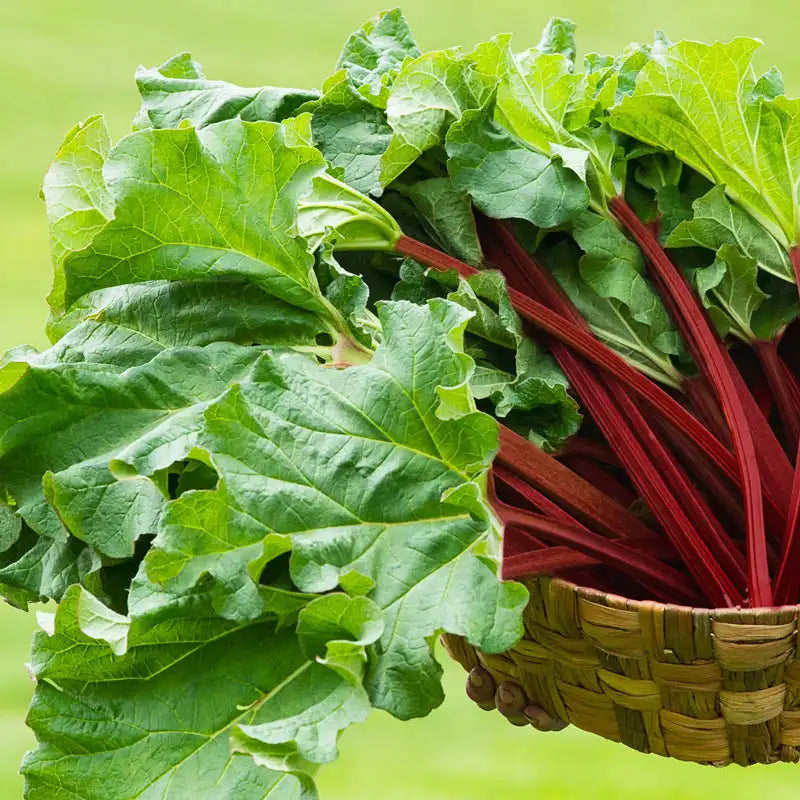
• Harvesting: The plant will be smaller than Northern perennial plants. Plan for a first harvest around January. Never harvest more than a third of the plant at once. To harvest, firmly hold the base of the stalk, twist, and pull—do not cut the stalk, as open wounds can collect water and lead to rot.
• Only eat the stalks. The leaves contain dangerous levels of oxalic acid and should be discarded.
Me again: You’ll find lots of additional advice at reputable websites; it seems to be a popular topic at the Southern Living site.
And I swear I’m not making the Gurney stuff up! Really!